
Jump tp recipe: Pickled Fir Tips, Fir-Infused Syrup, Fir Needle Tea
Conifers (or Gymnosperms), one of the two major tree groups, are non-flowering and cone-bearing trees (Angiosperms are flowering plants, composing all other trees). Conifers include the tallest (Coastal Redwood – Sequoia sempervirens), largest by volume (Giant Sequoia – Sequoiadendron giganteum), and oldest non-clonal (Bristlecone pine – Pinus longaeva) tree species in the world. They are also ancient trees, established 60 million years ago, during the Carboniferous period.
Eating the Young Growth Needles
In this article, we will talk about ways to gather, process, eat, and drink from the long, thin leaves (aka needles) of conifers.
- If you are interested in cone-nuts (and California nutmeg!) as a food source, see the article “Cone Nuts of Auracaria and Pine”.
Here is a list of conifers that have edible needles (pretty much all but NOT yews):
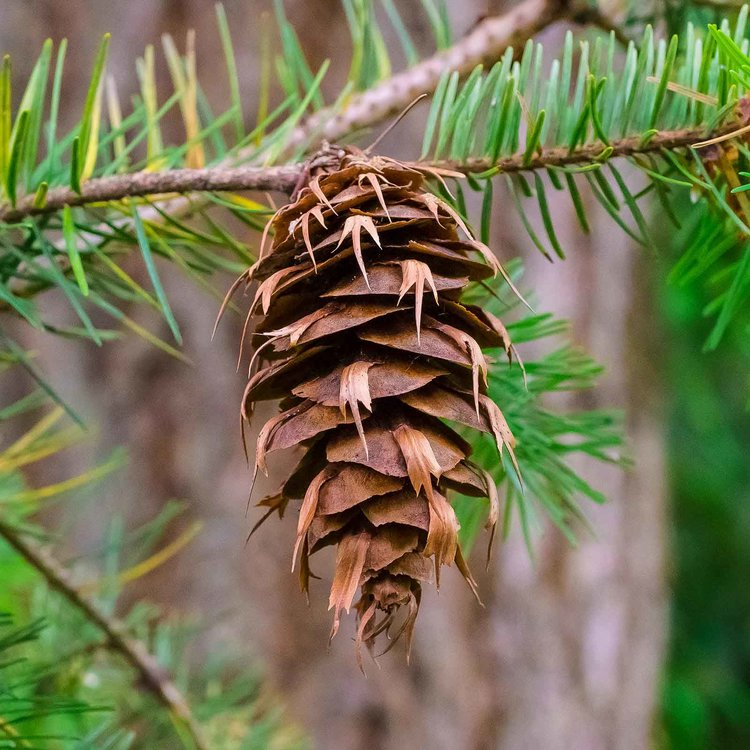
- Douglas-Fir (Pseudotsuga menziesii)
- See photo top left, below
- All Spruce (Picea spp.)
- All Fir (Abies spp.): locally White, Red, and Santa Lucia Fir
- See photo top middle, below
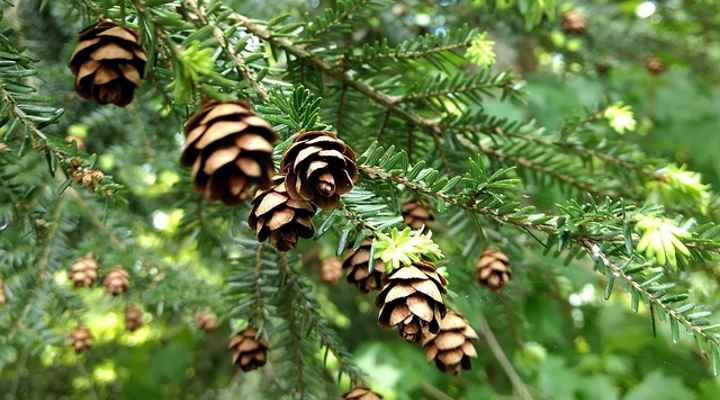
- Hemlock trees (Tsuga spp.): locally Western Hemlock
- See photo top right, below
- Do not confuse with the herbaceous plant Poison Hemlock (Conium maculatum)**
- All Pines (Pinus spp.): locally Ponderosa, Lodgepole, Jeffery, Western White, Sugar, Bishop, Monterey, etc.
- I would steer clear of using Ponderosa Pine internally if you are pregnant. There have been some (potentially falsely claimed) concerns that Ponderosa pine is toxic and can cause abortion when used internally (read: Foraging Myth Busting by Eat the Weeds).
- Coastal Redwood (Sequoia sempervirens)
- DO NOT USE NEEDLES FROM YEW (Taxus spp. ) TREES – THEY ARE TOXIC
- See photo bottom, below


Harvest Tips in the Spring
As the snow melts and temperatures begin to rise, the dormant conifers push sap up their trunks, moving carbohydrates for vegetative (branches and needles) and reproductive (cones and seeds) growth. The new needles are neon green! Those are what we want to eat – not the old, waxy needles (which are just for tea).
Harvest by simply pinching off the bright green tips! Make sure to harvest sparsely (wild-gathering rule of only taking 1/3) since these are the growing tips of the tree. They will come off easily and will be much more soft (herbaceous) than the other darker-green needles. The papery sheaths can be rubbed off before using the needle tips (see photo below).

The needles are high in vitamin C, used medicinally around the world as a nutritious tea and to cure scurvy in the past.
As for recipes, I would only eat small amounts of the fir tips fresh, using similar quantities to other herbs (like rosemary). I have been inspired by other wild-gathering cooks and recommend the following: pickled fir tips, fir-infused syrup, and tea.
Pine needles also make excellent soda or fermented drink!
Pickled Fir Tips
Ingredients
1 cup of fir tips (or any trees from the list above)
spices
¼ tsp salt
White vinegar
Instructions
- Put everything in a jar or container
- Store in the refrigerator and let flavors infuse over a few days
- Use as you would with pickled herbs or vegetables! Enjoy 🙂
Fir-Infused Syrup
Ingredients
1:1 fir tips to brown sugar
Or...
1 cup fir tips (or any trees from the list above)
1 cup brown sugar
Instructions
- Combine the fir tips and sugar (blend together, if desired) and pack the mixture into a quart jar
- Leave the jar out to age and allow juice from the needles to come out
- Pack with more sugar and needles if there is too much space in container – may help to reduce contamination (although like honey or molasses, if you keep it clean, then nothing to worry about)
- Leave jar for a month or so, stirring occasionally to submerge the fir tips, using only clean utensils
- After aging, boil mixture, strain needles, and pour syrup into a jar
- For storage, set in fridge or water-bath can
- Use as you would for any syrup: pancakes, glazes, mixed drinks, etc.
Fir Needle Tea
For tea, the needles can be harvested at any time! Simply harvest a handful of any of the needles above, pour hot water over, strain, and enjoy! This infusion will be full of vitamin C and have flavors of citrus and… pine.
 The Ecologist Cowboy