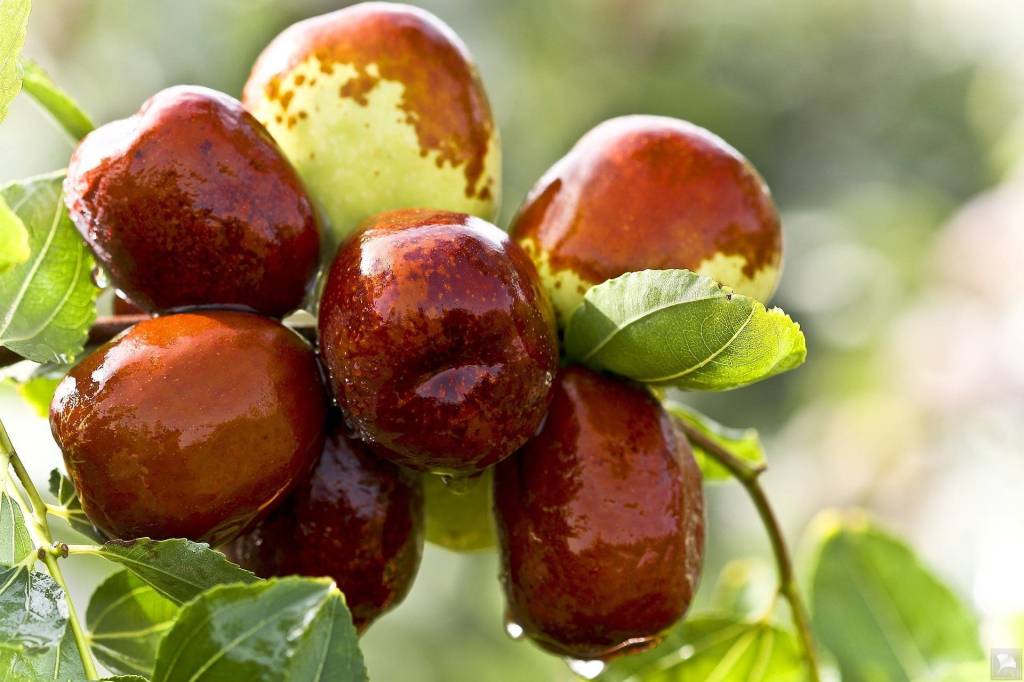
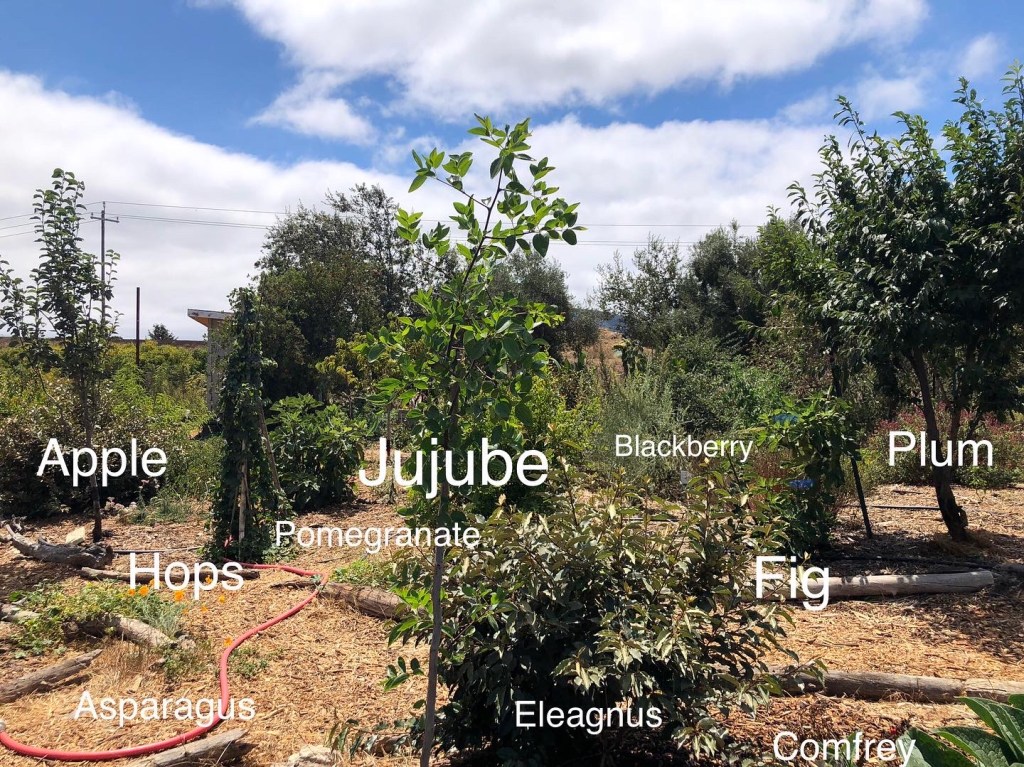
Jujube (Ziziphus jujuba), also called red date, Chinese date, and Chinese jujube, is an Asian fruit tree in the buckthorn family (Rhamnaceae). I commonly incorporate jujube trees into my orchards in arid, semi-arid, and temperate orchards in California!
Another great candidate for Californian and Mediterranean agroforestry!
Jujubes can grow as a small tree or shrublike. The branches have thorns, which can be a pain but also helpful for edible hedgerows. The fruits themselves are drupes with hard pits in the center. The fruit is often eaten dried, but fresh jujubes resemble small, less sweet apples.
Plant Community and Climate
We think of the jujube as a “desert apple,” drought-tolerant, seriously heat-resistant, and cold-resistant, thriving in USDA zones 6 – 9. The tree loves the Central Valley heat in California, as well as temperate areas from the coastal West to the temperate Mid-West and Southern US.
Adapted to extremes, no temperature seems too high in summertime and winter dormancy allows it to survive temperatures to about -25° F. To properly fruit, a bit of summer water and around 100 to 150 chill-hours are required to set fruit (California Rare Fruit Growers).
Tree Crop Adoption in the US
Both an advantage in minimized competition and a disadvantage in lacking cultural significance in the West, the jujube is prized in Asia and underutilized in the US and the West. Culinary practices are slowly growing in the US and there is some cultivation in southern California, as well as our pal in the Cuyama Valley in central California (Just Jujubes). Let’s incorporate this sustainable, drought-tolerant tree into our agriculture folks!

Origin
Domesticated in 9000 BCE in South Asia, jujubes are thought to have originated from southwest Asia, between Lebanon, northern India, and southern and central China, and possibly also southeastern Europe though more likely introduced there.
Native, wild jujubes are common in the regions listed above, particularly in China. After an ancient domestication process, they are ubiquitous and treasured in areas of Asia and the Middle East.
Culinary and Medicinal Uses
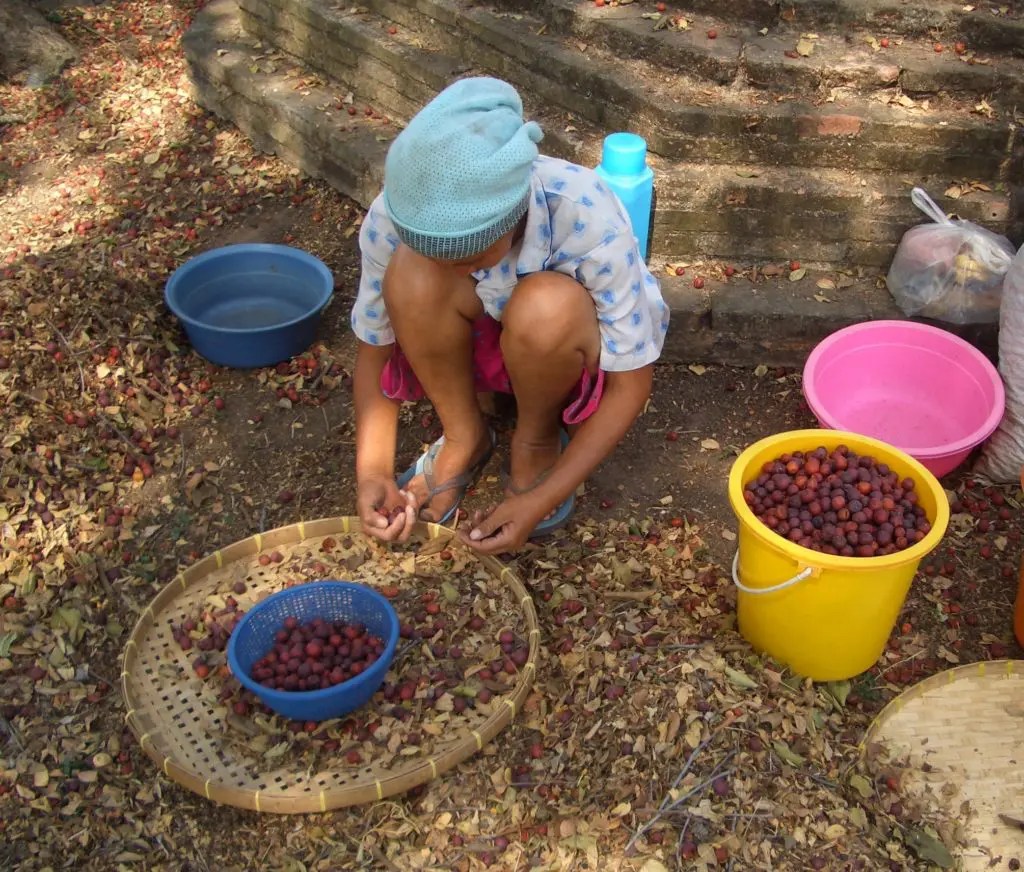
Jujube fruit is a staple for Asian cultures. The fruit can be eaten fresh, as well as pickled, smoked, or cooked otherwise. The fruit is most commonly eaten dried, since they dry naturally fairly quickly. Jujube soup and tea (leaves can be used for tea too!) is known for its medicinal properties, alleviating stress and exhibiting anti-fungal, anti-bacterial, anti-ulcer, and anti-inflammatory properties. Additionally, the fruit has been used for juices and wine. Cakes, jams, paired with meat – get crazy ya’ll!
Grow Your Own!
Li and Lang are the most popular varieties of jujubes, while new varieties (like Honey Jar) are also quite tasty.
Plant jujube trees in areas with full sunlight and well-drained soil. They are tolerant of a range of soil pH levels, as well as salinity, drought, and standing water. The trees can be grown from seed and are commonly whip-grafted to our favorite varieties.
Although the trees will survive in extreme cold or heat and drought, small to moderate watering will ensure quality fruit in the summer.
 The Ecologist Cowboy